
Quiet Luxury in Interiors: Restraint as a Design Principle
«Quiet Luxury» describes a design trend that moved from the fashion world into interiors in 2023: high-quality, restrained materials instead of conspicuous logos. This article traces where the term comes from, what professionals mean by it, and what about it cannot be scientifically substantiated.
A language trend from fashion, arrived in interiors
«Quiet Luxury» is, first of all, a term noted by language observation, not an established technical term. The Cambridge Dictionary's language-observation blog documented the phrase on 5 June 2023 as a newly noted word combination, describing it there as a fashion trend for clothing of very high quality, well cut and in neutral colours; it does not have its own main dictionary entry. The same blog post also recorded a related term, «blandstanding», for wearing simple, practical but very expensive clothing — a sign that «Quiet Luxury» was part of a broader language movement around deliberately understated luxury, not an isolated, one-off phenomenon.
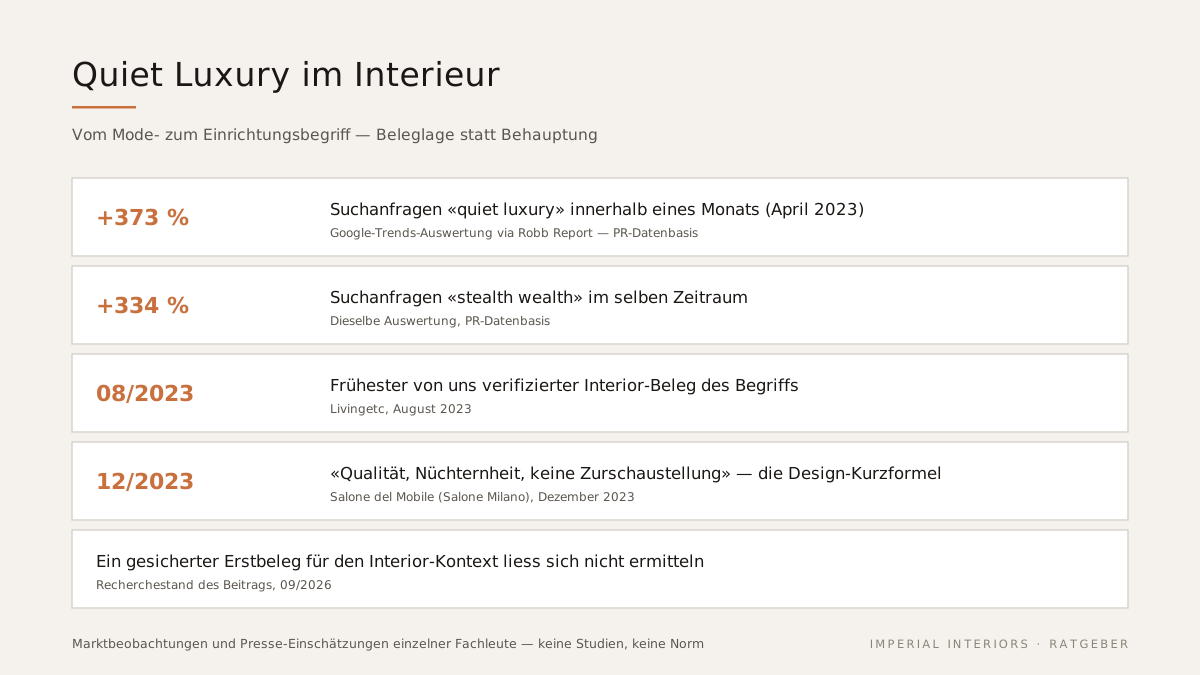
How quickly the term spread in 2023 is shown by a Google Trends analysis commissioned by a British fashion brand, cited in the lifestyle magazine Robb Report: searches for «quiet luxury» are reported to have risen by 373 percent within a month in April 2023, and searches for «stealth wealth» by 334 percent. For context: this is a commercial brand analysis based on search volume over a short period, not a scientific survey, and it concerns fashion, not interiors. The same article attributed the rise to a general move away from conspicuous logos towards cut, design and material quality. In the design and interiors press, the term is documented from summer 2023 at the latest: the British interiors magazine Livingetc used it for the home in August 2023, and in December 2023 the media portal of the Milan furniture fair Salone del Mobile described it as a trend moving from fashion into the design industry, with the shorthand «quality, sobriety, no ostentation». We were unable to establish a confirmed first use of the term in an interiors context.
For context, it matters that all the sources named so far are editorial observations or commercial brand analyses, not scientific studies. Neither the Cambridge language blog nor the cited Google Trends analysis is equivalent to an official main dictionary entry or an academic study — both merely document that a term appears, or is searched for, not how widespread the underlying design practice actually is, or what effect can be attributed to it.
What interior designers mean by it
For the home, New York interior designer Artem Kropovinsky, quoted in the British magazine Livingetc (August 2023), describes «Quiet Luxury» as an elegance that whispers rather than shouts — a multitude of details working together harmoniously without overwhelming the senses. What matters in this formulation is the emphasis on interplay: it is not a single striking element that takes centre stage, but the way many small, carefully chosen details interlock. In the same feature, New York architect Andrew Kotchen frames the style in the home as not performative, but rather focused on comfort, ease and quality, with an emphasis on functionality, craftsmanship, beauty and ease.
The German-language advice portal Immowelt frames «Quiet Luxury» in interior design similarly in a recent article (2026): as high-quality restraint with simple yet refined furniture pieces, natural materials such as wood and marble, and neutral colour schemes. Furniture and decorative elements, in the portal's own wording, are not meant to demand attention but to win people over through fine details and durability. Across all three sources, a common thread emerges: the yardstick lies less in the origin of a single piece of furniture than in how carefully material, craftsmanship and colour choice are coordinated within the overall picture.
- «An elegance that whispers rather than shouts» — Artem Kropovinsky in Livingetc, August 2023
- Not performative, but focused on comfort, ease and quality — Andrew Kotchen in Livingetc, August 2023
- Simple, refined furniture pieces, natural materials, neutral colour schemes — Immowelt, 2026
- Fine details and durability rather than seeking attention — Immowelt, 2026
Materials: texture and tactility instead of logos
Several of the professionals cited place material choice at the centre. Interior designer Lisa Staton describes, to Livingetc (August 2023), a mix of old and new elements and a broad range of textures; velvet, brass, stone and leather count, in her view, as inviting materials that — in her own assessment — age particularly gracefully over time. This emphasis on durability stands in contrast to short-lived, disposable decor items: a material allowed to show signs of wear, rather than hide them, counts on this reading as higher quality, not as worn out.
According to Salone Milano (December 2023), architect Vincent Van Duysen attaches great importance to the choice of natural and organic materials; in his own words, they give him a sense of calm and completeness, and he attributes a significant part of the emotion in his work to tactile aspects and the interplay of textures. He himself describes his design approach as a kind of visual silence, which, in his own conception, is meant to foster comfort and create spaces in which people can switch off. As must be noted here, these are the subjective design intentions of a single architect regarding his own work — not proven effects on well-being or health, and not a claim that could be generalised. Anyone reading these assessments should therefore understand them as the aesthetic judgements of experienced designers, not as a tested property of a material.
Distinction from minimalism
The trade press explicitly distinguishes «Quiet Luxury» from minimalism — a confusion that seems natural at first glance, since both styles avoid loud statements. According to Salone Milano (December 2023), author Wim Pawels, who published a 2023 illustrated book featuring 18 international interiors on the theme, draws a clear line between the two approaches: minimalism stands for a functional, pared-back aesthetic, while «Quiet Luxury» describes spaces that remain lavish and comfortable — the difference lies in the handling of materials, colours, details and atmosphere, not in the quantity of furniture and objects present.
According to the same source, the Milan design studio Studiopepe puts it in similar terms: «Quiet Luxury» is not just the timeless, ageless elegance of spaces but, above all, a way of life and a «rediscovery of essential, well-made things». On this reading, it is less about a fixed shopping list of particular materials than about an attitude towards one's own home: deliberately few but carefully chosen, durable pieces, rather than a quick turnover of decor.
Limits of this account — and what it means for choosing furniture
For all the depth of description from the professionals cited, it should be noted: «Quiet Luxury» is a press- and market-driven trend term, not a scientific term and not a certification mark. We are not aware of any psychological or scientific study that examines «Quiet Luxury» as an interior style or measures its effect on well-being — all the assessments gathered here come from individual architects, design studios and editorial outlets, not from a representative or controlled study. Nor do the search data mentioned at the outset say anything about how many homes are actually decorated in this sense — they measure only how often a term was searched for online. Anyone who wants to be guided by this is therefore best off understanding the term as a steer towards a design approach — high-quality, durable materials, a restrained visual language, neutral colours — and not as a tested standard or a category with fixed criteria.
For anyone who wants to put this design approach into practice at home: at our showroom you will find beds and living-room furniture with a restrained visual language and various material finishes to compare. This is no substitute for any of the assessments by individual professionals described above — in the end, what decides is the personal impression on the spot, not a trend term.
Frequently asked questions
What does «Quiet Luxury» mean when it comes to your home?
It is a press- and market-shaped term for a restrained interior style: high-quality, durable materials and a calm visual language instead of conspicuous logos or statement pieces. New York interior designer Artem Kropovinsky describes it to Livingetc (August 2023) as an elegance that whispers rather than shouts; the advice portal Immowelt (2026) sums it up as high-quality restraint with simple, refined furniture pieces, natural materials and neutral colour schemes.
Where does the term «Quiet Luxury» come from?
From fashion coverage: the Cambridge Dictionary's language-observation blog documented «quiet luxury» on 5 June 2023 as a newly noted word combination for a fashion trend, without it ever becoming a main dictionary entry in its own right. A Google Trends analysis by a British fashion brand, cited in Robb Report magazine in April 2023, recorded a 373 percent rise in searches within a month, attributed to a shift away from conspicuous logos towards cut and quality. For the home, it is documented from August 2023 at the latest (interiors magazine Livingetc); in December 2023 the media portal of the furniture fair Salone del Mobile also described it. We were unable to establish a confirmed first use of the term in an interiors context.
Is «Quiet Luxury» the same as minimalism?
No — not according to the account given by Wim Pawels (quoted in Salone Milano, December 2023): minimalism stands for a functional, pared-back aesthetic, while «Quiet Luxury» describes spaces that remain lavish and comfortable. The difference, accordingly, lies in the handling of materials, colours, details and atmosphere, not in the degree of reduction.
Which materials are considered typical of «Quiet Luxury»?
The cited trade articles name mainly velvet, brass, stone and leather (Lisa Staton in Livingetc, August 2023), as well as natural and organic materials in general (Vincent Van Duysen, according to Salone Milano, December 2023). Immowelt (2026) additionally names wood and marble in combination with neutral colour schemes. These are recurring observations from individual professionals, not a binding or tested list of materials.
Are there scientific studies on the effect of «Quiet Luxury» interiors on well-being?
No. We are not aware of any psychological or scientific study that examines «Quiet Luxury» as an interior style or measures its effect on well-being or health. Statements such as Vincent Van Duysen's, that his choice of materials gives him a sense of calm, are an architect's personal assessment of his own design intention — not proven health effects.
Sources & studies
The factual statements in this article are based on the following sources — each framed in the text as a study, testing institute, official figure, convention or manufacturer information:
- Cambridge Dictionary Blog ('About Words'), Eintrag 'New words – 5 June 2023'
- Robb Report, Tori Latham, 'Searches for Quiet Luxury Have Skyrocketed 373% Over the Past Month, New Research Says'
- Livingetc, Ellen Finch, '10 living rooms that have perfected the quiet luxury trend'
- Salone Milano (Salone del Mobile.Milano), Marta Galli, 'Quiet luxury: an impression of discreet luxury, also in design'
- immowelt.de (Ratgeber), Andreas Steger, 'Dein Zuhause wirkt unruhig? Diese 5 Quiet-Luxury-Ideen lassen es sofort edler aussehen'
Prefer personal advice?
Initial consultation, first home visit and initial concept are free and non-binding. Try our beds any time in the showroom at Nüschelerstrasse 30, Zurich.