
Bed Linen Materials Compared: Cotton, Percale, Sateen, Linen and Silk
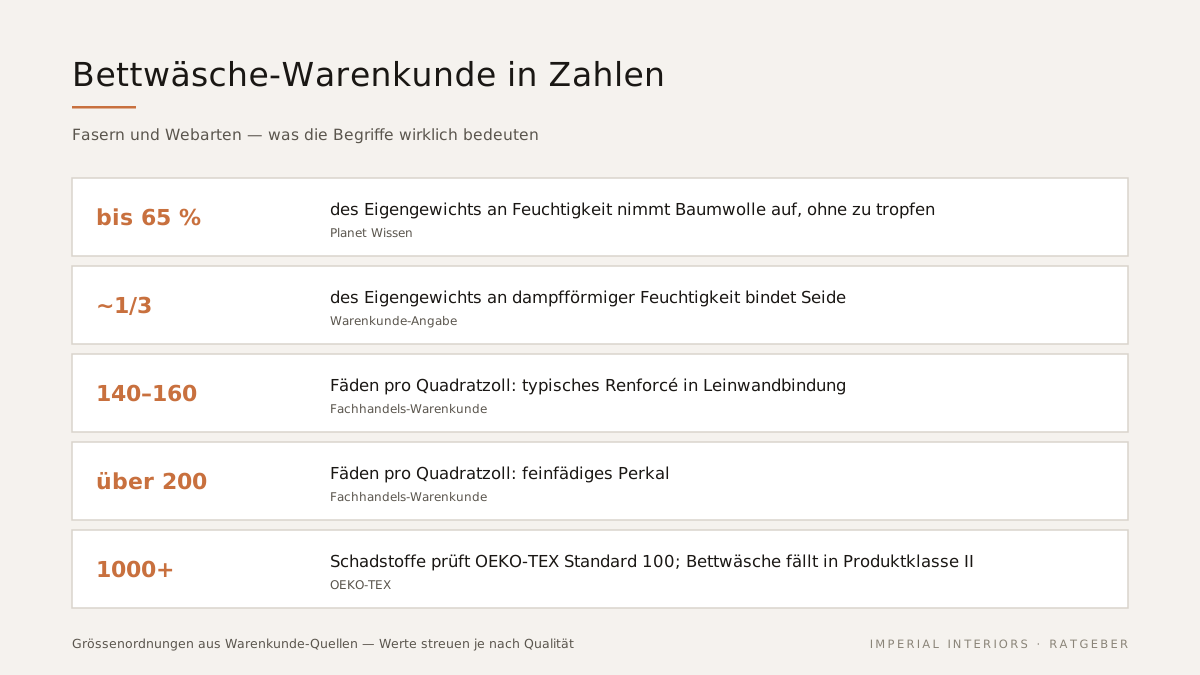
Percale, Renforcé and sateen aren't materials, they're weaves – usually made of cotton; sateen bedding is therefore usually not silk. The fibres differ above all in how they handle moisture: cotton absorbs up to 65 percent of its own weight in moisture without dripping, according to Planet Wissen, silk around a third, and linen is the most permeable to water vapour. When it comes to care, cotton is the most forgiving – Renforcé is usually washed at 40 to 60 degrees, while for silk the care label is what counts. And OEKO-TEX Standard 100 tests for over 1000 harmful substances but says nothing about quality or sleep comfort.
Fibre isn't weave – the most important distinction first
Percale, Renforcé and sateen aren't materials, they're weaves – as a rule, made of cotton. Anyone comparing bed linen therefore needs to keep two questions apart that get constantly mixed up in retail: which fibre is the fabric made of – cotton, linen or silk? And how is that fibre woven? That also settles the most stubborn misconception straight away: sateen bedding is usually not silk. Sateen refers to the satin weave, a weaving technique that produces the naturally glossy, silky-smooth, flowing surface – mako sateen is simply cotton woven this way. Conversely, one and the same fibre can feel completely different depending on the weave: cotton comes matte and cool (percale), glossy and flowing (mako sateen), or straightforward and hard-wearing (Renforcé). So if you ask about the "material" in a shop, always ask for both answers – fibre and weave.
Cotton, linen, silk: how the fibres handle moisture
The most practically important difference between the fibres is how they handle moisture – and here, orders of magnitude are more honest than decimal points, because the published percentage figures vary depending on the measurement method. Cotton absorbs the most: up to 65 percent of its own weight without dripping, according to the education portal Planet Wissen; it's breathable and doesn't scratch, but dries slowly as a result. Its durability is explained by the Bremen Cotton Exchange, the cotton industry's trade association: the fibre can stretch by 8 to 10 percent both dry and wet, and wet it's actually stronger than dry – which is why cotton bed linen survives many wash cycles.
Linen works differently: the European flax trade association – citing a laboratory study – describes how linen absorbs liquid immediately and spreads it especially widely, and is the most permeable of the fibres to water vapour; skin stays drier as a result. At the same time, linen insulates moderately and, thanks to its air permeability, is considered strongly temperature-regulating. Silk, finally, absorbs around a third of its own weight in vapour-form moisture, according to a silk manufactory; it initially feels cool, while its densely packed fibres form millions of tiny cavities that store warmth – which is why silk is used in both summer and winter.
Renforcé, percale, sateen, jersey, seersucker: the fabrics at a glance
The following short portraits summarise what specialist retail and manufacturer materials guides consistently describe – these are trade conventions, not standards. Thread count (threads per square inch) mainly shows how fine the yarns are that a fabric is woven from.
- Renforcé – cotton in plain weave: warp and weft threads cross one to one; 140 to 160 threads per square inch is common. The hard-wearing, easy-care classic.
- Percale – more densely woven cotton from finer yarns, with over 200 threads per square inch: a smooth, matte surface, feels fine and cool, and is considered suitable year-round according to manufacturers.
- Mako sateen – cotton in satin weave: natural sheen, a silky-smooth, flowing surface – without a single silk fibre.
- Jersey – not woven but knitted: light, elastic, holds its shape, especially soft and warming, and doesn't need ironing.
- Linen – here fibre and fabric name coincide: lies light and pleasantly cool on the skin; the characteristic creasing of washed linen is, according to manufacturer materials guides, "not just allowed, but desired".
- Seersucker – a crepe weave with a puckered surface: lets air circulate, barely creases and doesn't need ironing.
Care: cotton forgives a lot, silk goes by the label
The short answer: the closer a fabric is to pure cotton, the more it forgives – with silk, the care label alone decides. Cotton can even withstand boil-washing if needed, according to Planet Wissen; for Renforcé, 40 to 60 degree machine washing is common in retail. Jersey and seersucker are the pragmatists among the fabrics: neither needs ironing. Linen doesn't need special treatment in the strict sense, but it does need the right expectation: creasing is part of the material and not a care mistake – anyone who wants a permanently smooth look is better served by percale or mako sateen. For silk, we deliberately give no washing temperature: no universally reliable care rules exist for it; the manufacturer's instructions on the label are what counts. This ranking applies generally, by the way: all the temperatures given are trade figures – the label on the specific product overrides any rule of thumb.
OEKO-TEX Standard 100 – and what studies show about sleep
OEKO-TEX Standard 100 is a test for harmful substances – no less, but also no more. The label stands for "textiles tested for harmful substances": the article is tested for over 1000 harmful substances, and in every component – every thread, every button, every accessory. Behind it is the OEKO-TEX community, an alliance of textile testing institutes – so a private testing system, not a state standard. The standard distinguishes four product classes by intensity of skin contact; bed linen falls into Class II (articles with direct skin contact), while the strictest limits apply in Class I for baby and toddler items. What the label doesn't assess: weaving quality, durability or comfort – it tests for harmful substances.
And does the "right" material mean better sleep? Here we deliberately stay cautious, because the evidence is thin: a systematic review in the Journal of Sleep Research (2024) screened 2362 papers and found only nine usable studies on the textile fibres of nightwear and bedding – for bed sheets, exactly one exists, on linen, with improvements under warm conditions. Wool nightwear showed the clearest advantage for falling asleep in a cool environment; the authors' conclusion: heterogeneous results, more standardised research needed. Material properties such as moisture absorption are solidly described – no sleep promise can be derived from that, and we make none.
Fabric is judged with your hands – the way to the showroom
Bed linen can only be judged halfway online: fibre, weave and care instructions are in the spec sheet – the feel, weight and drape of a fabric only reveal themselves with your hands. In our showroom at Nüschelerstrasse 30 in Zurich, five minutes' walk from the main station, the materials can be compared directly side by side; we make the textiles of our own brand NUVOSETTE from Italian fabrics. If you bring the materials knowledge from this article with you, you'll know the three right questions to ask on site: which fibre? which weave? which care? We're open Monday to Friday from 10:00–19:00 and Saturday from 10:00–18:00, no appointment needed. And if you're rethinking not just the bed linen but the whole bed, it's best to combine the visit with a sleep consultation – the initial consultation is free.
Frequently asked questions
Is sateen bedding made of silk?
No, usually not. Sateen isn't a fibre, it's a weave: the satin weave, which produces the typical sheen and the smooth, flowing surface. Mako sateen is accordingly cotton woven this way. If you want genuine silk, look at the fibre listed, not the term "sateen".
What's the difference between percale and Renforcé?
Both are usually cotton fabrics – the difference lies in yarn fineness and thread count. Renforcé is a plain weave with, commonly in retail, 140 to 160 threads per square inch; percale is woven more densely from finer yarns and sits above 200 threads per square inch. As a result, percale feels finer, more matte and cooler, while Renforcé is the hard-wearing, easy-care standard.
How hot can bed linen be washed?
For Renforcé cotton, 40 to 60 degree machine washing is common in retail; pure cotton can even withstand boil-washing if needed, according to the education portal Planet Wissen. There's no blanket rule for silk – the manufacturer's care label is what counts. In general, the instructions on the specific product's label override any rule of thumb.
What does OEKO-TEX Standard 100 mean for bed linen?
The label confirms the article has been tested for over 1000 harmful substances – in every component, from the thread to the button. Bed linen falls into product Class II for articles with direct skin contact; the strictest limits apply in Class I for baby items. It's a private testing system run by textile testing institutes, not a state standard – and a test for harmful substances, not a quality test.
Do you sleep better in linen or silk than in cotton?
There's currently no reliable evidence for that. A systematic review in the Journal of Sleep Research (2024) screened 2362 papers and found only nine usable studies on fibres and sleep – for bed sheets, exactly one. The materials measurably differ in how they handle moisture and warmth; which feels better remains a personal question best settled on the fabric itself.
Sources & studies
The factual statements in this article are based on the following sources — each framed in the text as a study, testing institute, official figure, convention or manufacturer information:
- OEKO-TEX — Standard 100
- Planet Wissen (WDR/SWR) — Baumwolle
- Bremer Baumwollbörse — Biologie und Eigenschaften
- Bettwaren-Shop — Warenkunde Renforcé
- Schlossberg Switzerland — Bettwäsche-Qualitäten
- Alliance for European Flax-Linen & Hemp — Flax Performance
- Solunière — Eigenschaften von Seide
- Li, Halaki & Chow 2024 — Journal of Sleep Research
Note: This article provides general knowledge and does not replace medical advice. Persistent complaints should be clarified by a doctor.
Prefer personal advice?
Initial consultation, first home visit and initial concept are free and non-binding. Try our beds any time in the showroom at Nüschelerstrasse 30, Zurich.