
What Good Sleep Does for Body and Mind – the Research
According to the consensus recommendation of the National Sleep Foundation, adults need 7 to 9 hours of sleep. Research links sufficient sleep to a functioning immune system, to memory formation and to everyday safety: in one study, people who regularly slept 6 hours or less were around four times more susceptible to colds. In Switzerland, around a third of the population reports sleep disorders.
How Much Sleep You Need
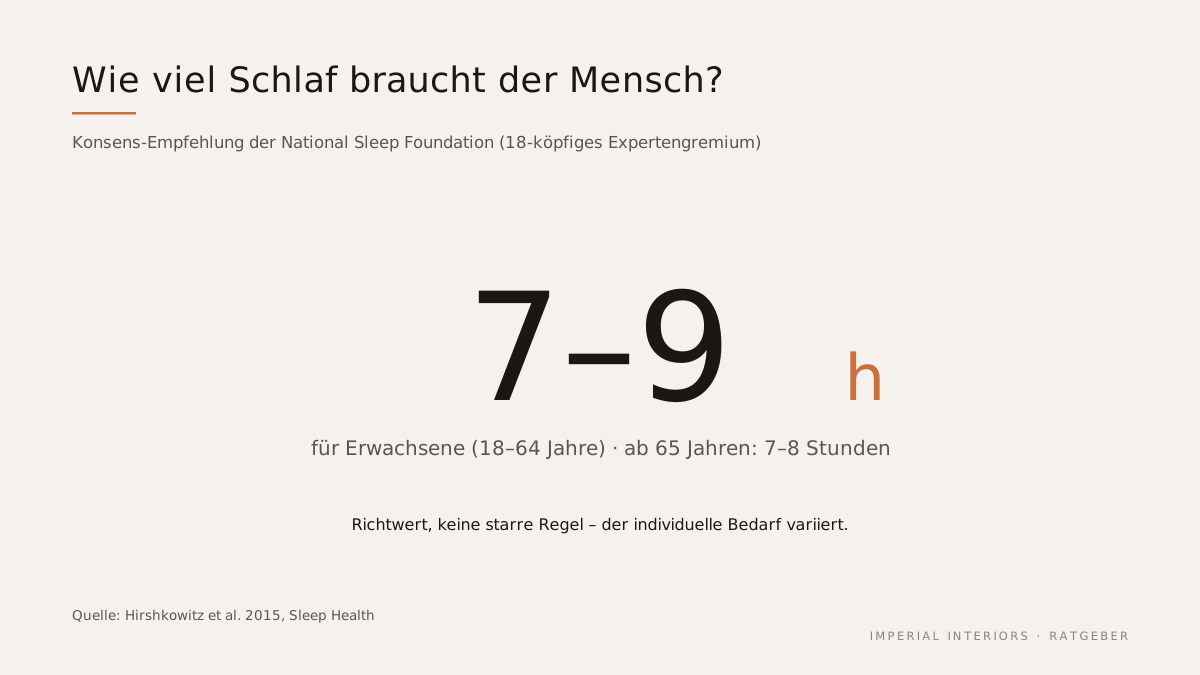
The most-cited recommendation comes from an 18-member expert panel of the American National Sleep Foundation: 7 to 9 hours for adults aged 18 to 64, and 7 to 8 hours from 65 onwards. The right reading matters – this is a scientific consensus guideline, not a rigid rule; individual needs vary. If you are awake and productive during the day without artificial aids, you are usually getting it right.
Sleep and the Immune System
The most striking single finding comes from a study in which 164 healthy adults were exposed to a cold virus under controlled conditions after a week of measured sleep: those who had slept 6 hours or less fell ill around four times more often than people with more than 7 hours of sleep. A comprehensive review in Physiological Reviews puts this in context: sufficient sleep is associated with lower infection risk and better vaccine responses, while chronic sleep deprivation is associated with persistent low-grade inflammation. The authors also stress that causality in humans has not been conclusively proven – these are strong associations, not guarantees.
Sleep, Memory and Performance
Among the best-replicated findings of sleep research is sleep's role in memory: newly learned material is reactivated primarily during deep sleep and transferred into long-term storage – researchers speak of active system consolidation. On the other side stands the risk of sleep deprivation: a meta-analysis of 17 studies puts the accident risk when drowsy at the wheel at around two and a half times. Cardiovascular associations are documented as well – both very short and very long sleep are associated in prospective studies with an increased risk of coronary heart disease and stroke, though the authors explicitly describe sleep duration as a marker, not a proven cause.
Sleep Problems in Switzerland
How relevant the topic is in Switzerland is shown by the figures from the Bundesamt für Statistik (Swiss Federal Statistical Office): in the Swiss Health Survey 2022, around a third of the population reported sleep disorders – 26 percent moderate and 7 percent pathological. Women, at 37 percent, are affected more often than men at 29 percent, and the share has risen since 1997. Persistent sleep problems belong in medical evaluation – they can have many causes, from stress to sleep apnoea to illness.
What the Sleep Environment Can Contribute – Put Honestly
A bed cures nothing, and anyone promising otherwise leaves the ground of science. What the sleep environment can do is create good conditions. It is documented that sagging, poorly supporting sleep systems impair sleep, that trapped heat and moisture increase wake phases and reduce deep sleep, and that a medium-firm, individually fitted sleep surface performs best on average. If you give your sleep 7 to 9 hours and a well-fitted bed with a comfortable climate, you have laid the foundations you can influence – the rest is down to lifestyle, health and sometimes medical help.
Frequently asked questions
How many hours of sleep do I really need?
The National Sleep Foundation recommends 7 to 9 hours for adults, and 7 to 8 from age 65. This is a consensus guideline with individual leeway – what matters is whether you feel rested and productive during the day.
Does too little sleep make you more prone to colds?
The data suggest so: in a controlled exposure study, people with 6 hours of sleep or less caught a cold around four times more often than those with more than 7 hours. The design was prospective and correlational – a strong association, not absolute proof.
Why is sleep important for memory and learning?
During sleep – especially deep sleep – newly learned material is reactivated and transferred into long-term storage (“active system consolidation”). This mechanism is among the best-replicated findings in sleep research.
How common are sleep disorders in Switzerland?
According to the Swiss Health Survey 2022 by the Bundesamt für Statistik (Swiss Federal Statistical Office), around a third of the population reports sleep disorders: 26% moderate, 7% pathological. Women (37%) are affected more often than men (29%).
Can a better bed improve my health?
No serious answer can claim that outright. What is documented: a well-fitted, supportive bed and a cool, dry bed climate create good sleeping conditions – and good sleep is associated with immune function, memory and safety. But a bed replaces neither lifestyle nor medical treatment.
Sources & studies
The factual statements in this article are based on the following sources — each framed in the text as a study, testing institute, official figure, convention or manufacturer information:
- Hirshkowitz M et al. (2015): National Sleep Foundation's sleep time duration recommendations. Sleep Health 1(1):40–43.
- Prather AA et al. (2015): Behaviorally Assessed Sleep and Susceptibility to the Common Cold. Sleep 38(9):1353–1359.
- Besedovsky L et al. (2019): The Sleep-Immune Crosstalk in Health and Disease. Physiological Reviews 99(3):1325–1380.
- Rasch B, Born J (2013): About Sleep's Role in Memory. Physiological Reviews 93(2):681–766.
- Bioulac S et al. (2017): Risk of Motor Vehicle Accidents Related to Sleepiness at the Wheel – Meta-Analysis. Sleep 40(10).
- Cappuccio FP et al. (2011): Sleep duration predicts cardiovascular outcomes – meta-analysis. European Heart Journal 32(12):1484–1492.
- Bundesamt für Statistik: Schweizerische Gesundheitsbefragung – Schlafstörungen 1997–2022 (Zusammenfassung via SRF News).
- Okamoto-Mizuno K, Mizuno K (2012): Effects of thermal environment on sleep and circadian rhythm. J Physiological Anthropology 31:14.
Note: This article provides general knowledge and does not replace medical advice. Persistent complaints should be clarified by a doctor.
Prefer personal advice?
Initial consultation, first home visit and initial concept are free and non-binding. Try our beds any time in the showroom at Nüschelerstrasse 30, Zurich.