
Side, Back or Stomach: What Sleep Research Knows About Positions
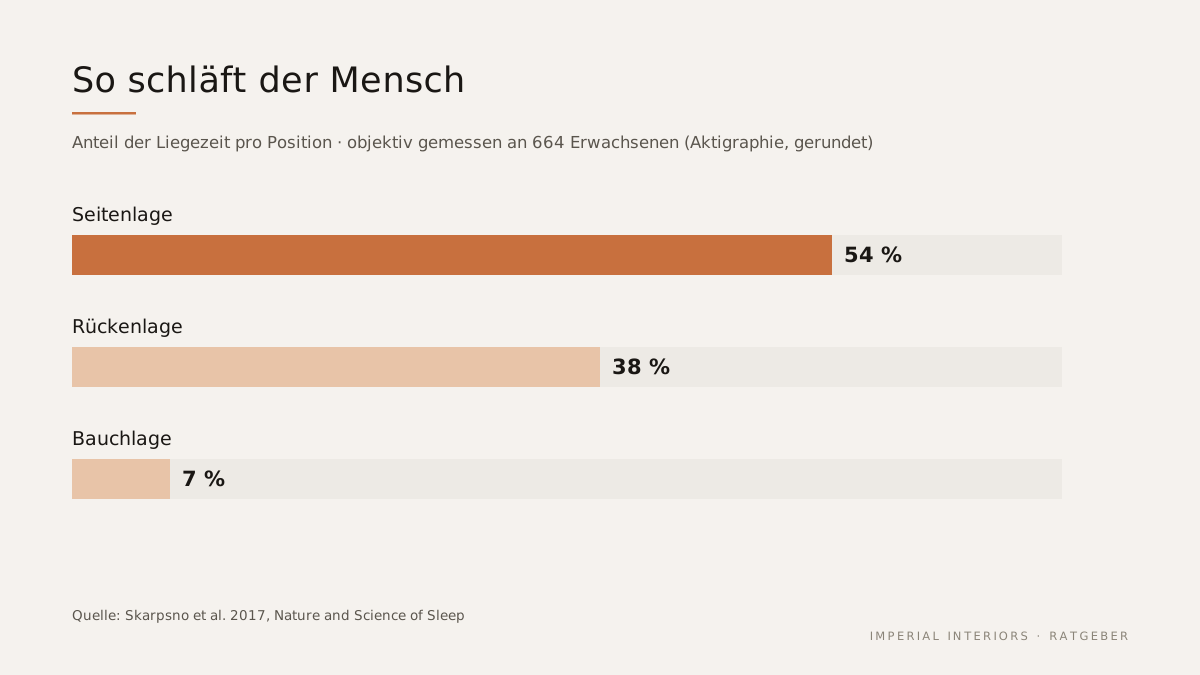
Objective measurements of 664 adults show that on average we spend a good half of the night on our side (54%), a good third on our back (38%) and only around 7% on our stomach – and side sleeping increases further with age. Research knows no single “healthiest position for everyone”; what matters is that the sleep surface suits your preferred position.
How People Actually Sleep
If you want to know how people really lie in bed, you cannot ask – you have to measure. A Danish study recorded the sleeping positions of 664 adults using motion sensors: on average, 54.1 percent of time in bed was spent in the side position, 37.5 percent on the back and 7.3 percent on the stomach. With age, the picture shifts further towards the side – from just under 48 percent among 20- to 34-year-olds to a good 58 percent among 55- to 65-year-olds. We also change position continually during the night, less often in older age than in younger years.
What Side Sleepers Need from Their Sleep Surface
In the side position, the shoulder is the widest part of the body – it must be able to sink in deeper than the waist for the spine to form a straight line. The ergonomics research by Verhaert and colleagues shows accordingly that sagging or poorly supporting systems impair sleep quality particularly for side and stomach sleepers, and that support adapted to the body's contours is decisive for alignment. Specific firmness-zone prescriptions for each position, by contrast, have hardly been tested in studies with hard endpoints – this is where the territory of biomechanical plausibility and consulting practice begins, and that is exactly what testing the bed is for.
Back Position, Stomach Position and the Firmness Question
For back sleepers, the rule is: the spine's natural double-S shape should be preserved; the pelvis must not sink through, and the pillow stays flat. The stomach position is the rarest at a good 7 percent and almost completely disappears in older age. On firmness, the research provides a clear guardrail: in the randomised Lancet study, medium-firm mattresses performed better than firm ones for chronic low-back pain – so “as hard as possible” is poor advice across all positions, too.
Special Questions: Reflux and Shoulder Pain
Two frequent consultation questions deserve an honest answer. First, reflux: a meta-analysis suggests that sleeping on the left side is associated with less nighttime heartburn than the back or right-side position – the data basis, however, is small, so the recommendation is correspondingly cautious. Second, shoulder pain: here the evidence is contradictory. One study found that two thirds of those affected slept on the painful side, while a larger study of 761 people found no association between sleeping position and shoulder complaints. Whether the position causes pain or pain determines the position remains open.
Practical Conclusions
- Choose your bed for the position you actually spend the most time in – for most people, that is the side position.
- Side sleepers: look for sink-in depth for shoulder and pelvis, with the waist supported; use a higher pillow.
- Back sleepers: a flatter pillow, with a surface that supports the spine's natural S-shape.
- Combination sleepers are normal – changing position at night is part of healthy sleep; the surface should make movement easy.
- For nighttime heartburn, sleeping on the left side may be worth a try (thin but consistent data).
Frequently asked questions
In which position do most people sleep?
On their side: objective measurements of 664 adults showed an average of 54% of time in bed on the side, 38% on the back and 7% on the stomach. The share of side sleeping increases further with age.
Is there one healthiest sleeping position?
No, research knows of none. What is established: the sleep surface must suit your preferred position so the spine stays aligned – and changing position during the night is normal.
Does sleeping on the left side help against heartburn?
A meta-analysis shows less nighttime acid exposure in the left-side position than on the back or right side. The data basis is small – but as a simple self-experiment, the left side is worth a try; persistent reflux belongs in medical care.
Does side sleeping cause shoulder pain?
This is scientifically unresolved: studies reach contradictory results, and the direction of the association (position causing pain, or the other way round) remains open. What certainly makes sense: a sleep surface that lets the shoulder sink in with little pressure.
Sources & studies
The factual statements in this article are based on the following sources — each framed in the text as a study, testing institute, official figure, convention or manufacturer information:
- Skarpsno ES et al. (2017): Sleep positions and nocturnal body movements based on free-living accelerometer recordings. Nature and Science of Sleep 9:267–275.
- De Koninck J et al. (1992): Sleep positions and position shifts in five age groups. Sleep 15(2):143–149.
- Verhaert V et al. (2011): Ergonomics in bed design – spinal alignment and sleep parameters. Ergonomics 54(2):169–178.
- Kovacs FM et al. (2003): Effect of firmness of mattress on chronic non-specific low-back pain. The Lancet 362:1599–1604.
- Simadibrata DM et al. (2023): Left lateral decubitus sleeping position is associated with improved GERD symptoms – meta-analysis. World J Clin Cases 11(30):7329–7336.
- Kempf B, Kongsted A (2012): Association between the side of unilateral shoulder pain and preferred sleeping position. JMPT 35(6):467–473.
- Holdaway LA et al. (2018): Is sleep position associated with glenohumeral shoulder pain and rotator cuff tendinopathy? BMC Musculoskeletal Disorders 19:408.
Note: This article provides general knowledge and does not replace medical advice. Persistent complaints should be clarified by a doctor.
Prefer personal advice?
Initial consultation, first home visit and initial concept are free and non-binding. Try our beds any time in the showroom at Nüschelerstrasse 30, Zurich.