
Bonnell, Pocket Springs, Multi-Layer Systems: Understanding Spring Cores
Not all spring cores are alike: in a Bonnell spring unit the springs are connected and respond as a surface, while in a pocket spring core each spring works individually inside a fabric pocket – which makes the support more precisely targeted. Multi-layer and zoned systems refine this principle. Studies support the benefits of zoned, adjustable elasticity for spinal alignment; a “best spring type for everyone”, however, is not proven.
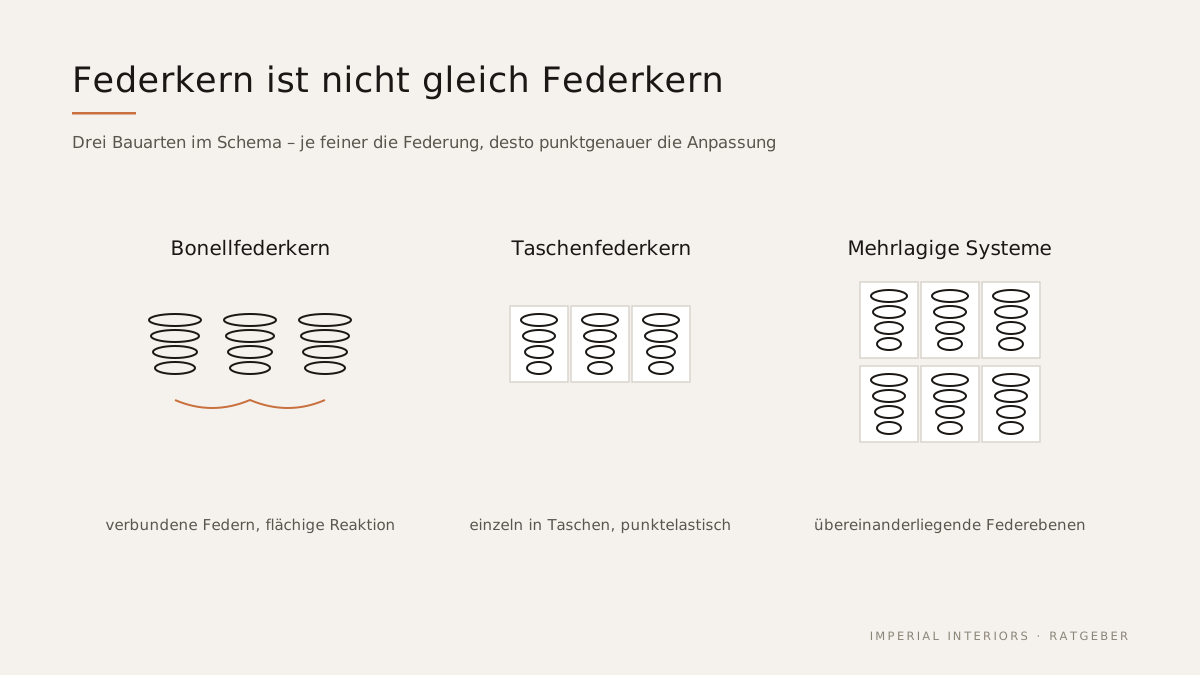
The Three Designs at a Glance
The terms describe how the steel springs in the core are arranged and connected – classic engineering knowledge, summarised here neutrally: in a Bonnell spring unit, waisted springs are connected into a single surface by spiral wires; press on one spot and the surrounding area yields with it. In a pocket spring core, each spring sits individually in a fabric pocket and can compress independently. Multi-layer systems stack two or more levels of springs on top of each other, often with different spring gauges; zoned variants deliberately vary the firmness for the shoulder, hip and leg areas.
Point Elasticity: The Documented Heart of the Matter
Scientifically, things get interesting with the question of what the design means for the body. A biomechanical review shows that sleep surfaces with zoned or adjustable elasticity achieve the best spinal alignment – better than uniformly firm or uniformly soft surfaces. Independently working springs are the classic route to this point elasticity: they allow the shoulders and pelvis to sink in locally without the middle of the body losing support. Just as honestly, it must be said: robust studies demonstrating that any particular spring type is superior on health or sleep outcomes do not yet exist.
Bed Climate: What Is Proven – and What Remains a Manufacturer Claim
One principle is well established: trapped heat and moisture in the bed disturb sleep. During undisturbed sleep, the microclimate under the duvet typically sits at around 32 to 34 degrees Celsius and 40 to 60 percent humidity; as heat or humid heat rises, wake phases increase while deep and REM sleep decrease. That open spring structures let air circulate is a plausible engineering argument – but independent study evidence that spring cores thereby deliver measurably better sleep than other constructions is lacking. We therefore consistently label such statements as manufacturer or engineering arguments.
Multi-Layer Systems: The Example of DUX
The Swedish manufacturer DUX, whose beds we present in Zurich, works – by its own account – with continuous steel springs in several layers; in the Pascal system, spring cassettes in three firmness levels can be swapped for the shoulder, hip and leg zones on each side of the bed. This is the practical implementation of what the research generally supports – individually adjustable, zoned elasticity – though the product-specific details are to be understood as manufacturer information. In the showroom, you can feel the difference between the designs for yourself, lying down: the same body, three very different responses from the sleep surface.
What to Look for in a Spring Core
- Check for precisely targeted support: does the shoulder sink in when you lie on your side, without the waist sagging?
- Put zoning and adjustability before brand promises – that is the scientifically supported advantage.
- Judge the system as a whole: base suspension, mattress, topper and room climate work together.
- For couples, look for independently adjustable bed sides.
Frequently asked questions
What is the difference between a Bonnell and a pocket spring core?
In a Bonnell spring unit, the springs are connected to one another and respond as a surface – press on one spot and the surrounding area moves with it. In a pocket spring core, each spring works individually inside a fabric pocket, allowing a more precise adaptation to the body's contours.
Is a spring core better than foam?
No across-the-board superiority of either design is scientifically proven. What is documented: the benefits of zoned, adjustable elasticity for spinal alignment, and the principle that trapped heat and moisture disturb sleep. Which construction solves this best for you is something testing the bed in person will show.
What do multi-layer or zoned spring systems offer?
They refine the support: several spring levels and zone-by-zone differences in firmness allow the sleep surface to be adapted to body type and sleeping position. Individually adjustable elasticity performs best for spinal alignment in biomechanical research.
Sources & studies
The factual statements in this article are based on the following sources — each framed in the text as a study, testing institute, official figure, convention or manufacturer information:
- Wong DW et al. (2019): Sleeping mattress determinants and evaluation – a biomechanical review and critique. PeerJ 7:e6364.
- Okamoto-Mizuno K, Mizuno K (2012): Effects of thermal environment on sleep and circadian rhythm. J Physiological Anthropology 31:14.
- Radwan A et al. (2015): Systematic review – mattress design, sleep quality and spinal alignment. Sleep Health 1(4):257–267.
- DUXIANA: The DUX Innovation – Continuous Springs (Herstellerangaben).
- DUXIANA: The Pascal Customizable Support System (Herstellerangaben).
Note: This article provides general knowledge and does not replace medical advice. Persistent complaints should be clarified by a doctor.
Prefer personal advice?
Initial consultation, first home visit and initial concept are free and non-binding. Try our beds any time in the showroom at Nüschelerstrasse 30, Zurich.