
Box-Spring Beds: Construction, Strengths and Who They Suit
A box-spring bed consists of three components: a sprung, upholstered box as the base, the actual mattress on top and usually a topper to finish. Typical of the design are the double-sprung lying feel and the raised entry height. Honestly put: there are no studies showing box-spring beds to be “healthier” – the choice is a matter of comfort and taste, best settled by testing the bed in person.
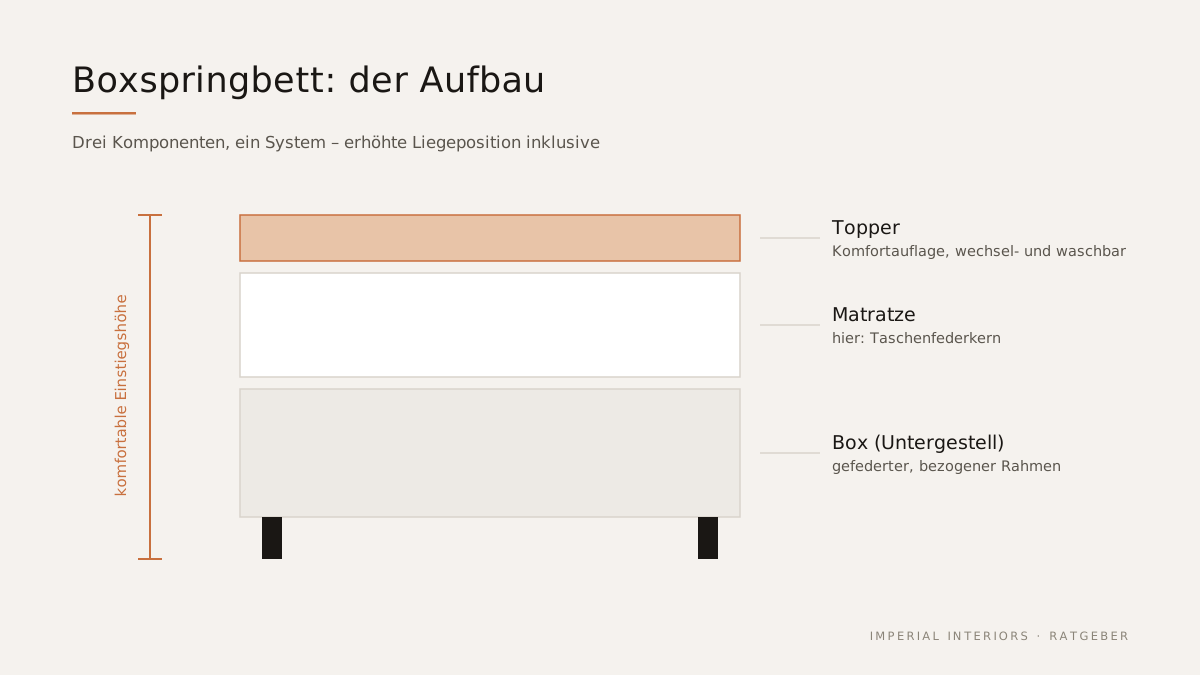
The Construction: Three Components, One System
The foundation is the box that gives the bed its name: a sturdy frame covered in fabric or leather, with an integrated spring system, standing on feet. On top lies the actual mattress – in our range with pocket springs – and the finishing layer is usually a topper, a comfort-giving pad that can be removed for washing or replacement. This description is product convention, not science – but it explains the two characteristics that define the box-spring bed: the double suspension of box and mattress, and the distinctly raised lying position.
Origins and a Question of Style
The box-spring principle has its tradition in North America and Scandinavia – in the American variant classically with a thick mattress and no topper, in the Scandinavian one as a three-part system with topper, which has also become the established form in Switzerland. This historical background is industry knowledge; no scientific literature on it exists, and we label it accordingly. What is beyond dispute is the visual character: box-spring beds stand taller and more imposing than slatted-frame beds and give a bedroom a hotel-style look.
Entry Height: The Practical Trump Card
With overall heights of around 60 centimetres, box-spring beds sit distinctly higher than classic bed frames. How relevant this is for getting up can be inferred from research on seat heights: for chairs, it is well documented that a higher seat makes standing up measurably easier for older people. For beds themselves this has not been studied directly – the transfer is biomechanically plausible but remains an analogy, which we label as such. In consulting practice it is confirmed time and again: those who want to go easy on their knees, hips or back experience the high entry as tangible relief – best simply tested in the showroom by sitting down and standing up.
Is a Box-Spring Bed “Healthier”? The Honest Answer
No – there is no body of research to support this. We are not aware of any independent, peer-reviewed study comparing box-spring beds with other bed systems in terms of sleep quality or health. What the research shows in general applies here too: what counts are proper support and firmness (medium-firm performs best on average) and a dry, not overheated bed climate. Whether a box-spring bed or a slatted-frame bed with a spring mattress fulfils these qualities better for you is a question of body type, lying feel and taste – not a matter of faith.
Who a Box-Spring Bed Is Right For
- Anyone who values a high, comfortable entry and exit – for instance with knee, hip or back concerns (a plausible inference from seat-height research).
- Lovers of the double-sprung, “hotel-like” lying feel – directly comparable when testing beds in person.
- Bedrooms where the bed is meant to make a deliberate statement.
- With a replaceable topper, for anyone who values hygiene and adaptability.
- If you prefer to lie lower or want a more delicate bed silhouette, you may well be better served by a slatted-frame bed with a spring mattress – from Flou, for example: test rather than believe.
Frequently asked questions
What does a box-spring bed consist of?
Three components: a sprung, upholstered box as the base, the mattress on top (in our case with pocket springs) and usually a removable topper as a comfort and hygiene layer.
Is a box-spring bed healthier than a normal bed?
There is no scientific evidence for this – comparative studies between bed systems do not exist. According to research, what matters are proper support, firmness and bed climate; which system fulfils these best for you is revealed by testing the bed in person.
Does the high lying surface make getting up easier?
This has not been studied directly for beds. For chairs, however, it is well documented that higher seats make standing up easier for older people – transferring this to bed height is biomechanically plausible and matches our consulting experience.
What distinguishes American and Scandinavian box-spring beds?
By industry convention: the American variant combines the box with a thick mattress and no topper, while the Scandinavian one is a three-part system of box, mattress and topper – the latter is the usual form in Switzerland.
Sources & studies
The factual statements in this article are based on the following sources — each framed in the text as a study, testing institute, official figure, convention or manufacturer information:
- Box-spring – neutrale Aufbaubeschreibung (Produktkonvention; Enzyklopädie-Eintrag, teils ohne Einzelnachweise).
- Kuo YL (2013): The influence of chair seat height on the performance of community-dwelling older adults' 30-second chair stand test. Aging Clin Exp Res 25(3):305–309.
- Radwan A et al. (2015): Systematic review – mattress design, sleep quality and spinal alignment. Sleep Health 1(4):257–267.
- Okamoto-Mizuno K, Mizuno K (2012): Effects of thermal environment on sleep. J Physiological Anthropology 31:14.
Note: This article provides general knowledge and does not replace medical advice. Persistent complaints should be clarified by a doctor.
Prefer personal advice?
Initial consultation, first home visit and initial concept are free and non-binding. Try our beds any time in the showroom at Nüschelerstrasse 30, Zurich.