
Bedroom Temperature: Why Heat Is the Real Sleep Thief
Heat and humid warmth demonstrably disturb sleep – they increase wake phases and reduce deep and REM sleep. A fixed “ideal temperature” such as the often-quoted 18 °C, however, is not scientifically robust: a large field study found the best sleep efficiency between 20 and 25 °C, with large individual differences. What matters is avoiding trapped heat and moisture in the bed.
The Bed Has Its Own Climate
Independently of the room temperature, a microclimate forms under the duvet: during undisturbed sleep it typically sits at around 32 to 34 degrees Celsius and 40 to 60 percent relative humidity. The body continuously releases heat and moisture during the night – if neither can escape, the climate tips. The research by Okamoto-Mizuno and Mizuno shows clearly: heat exposure increases wakefulness and reduces deep sleep and REM sleep, and humid heat intensifies this effect further.
The 18-Degree Myth
“18 degrees is ideal for sleeping” – you read it everywhere, yet a robust primary source for this specific figure is missing. The largest field study to date (around 11,000 nights across 50 older adults) found the highest sleep efficiency in the range of 20 to 25 degrees Celsius; when the temperature rose from 25 to 30 degrees, sleep efficiency dropped by 5 to 10 percent. Equally interesting: with appropriate bedding, room temperatures between roughly 13 and 23 degrees did not significantly disturb the sleep stages. The body compensates for coolness well with insulation – against heat, no duvet can help.
What This Means for Your Bed and Bedding
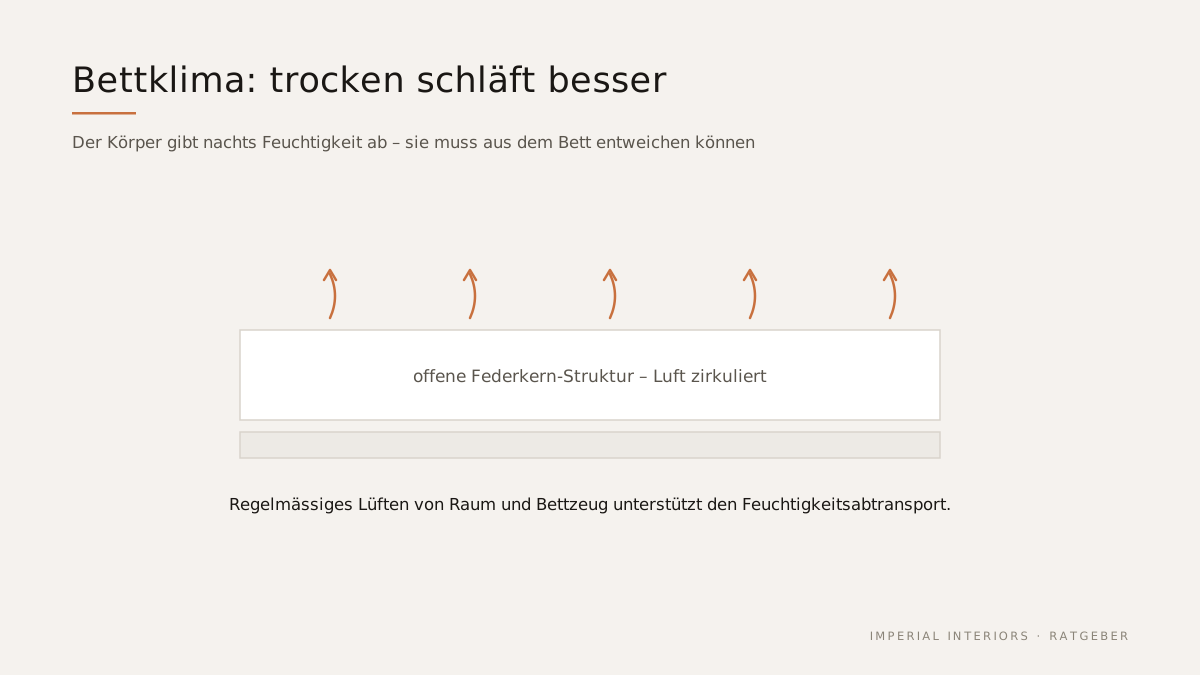
The proven lever is moisture management: materials and constructions that carry heat and moisture away keep the bed climate in the favourable range. Open spring-core structures let air circulate by design – as direct proof of sleep quality this is not backed by independent studies, but as a physical argument it is plausible. What is certain: regularly airing both room and bedding, along with breathable materials for the mattress cover, duvet and bed linen, supports the removal of nighttime moisture.
Practical Recommendations
- Keep the bedroom on the cool side and avoid overheating – heat is the proven disruptor, moderate coolness is not.
- You need not fixate on a specific temperature: match room temperature and duvet to each other.
- Think seasonally: a lighter duvet in summer, a warmer one in winter, rather than the same setup all year round.
- Air the room briefly but thoroughly in the morning and fold back the duvet so moisture can escape from the bed.
- If you experience night sweats, choose breathable natural materials for bed linen and nightwear.
Frequently asked questions
How warm should the bedroom be?
There is no single scientifically established figure. The best available field study found the highest sleep efficiency between 20 and 25 °C – with large individual differences. Above all, one thing is well established: heat above roughly 25 °C measurably worsens sleep, while moderate coolness with a suitable duvet hardly disturbs it.
Why do we sleep worse in the heat?
Heat exposure demonstrably increases wakefulness and reduces deep sleep and REM sleep; humid heat amplifies the effect. To fall asleep, the body must be able to release heat – if it cannot, sleep stays shallower.
Does humidity play a role?
Yes. The favourable bed climate lies at around 40 to 60 percent relative humidity; high humidity combined with warmth is particularly disruptive to sleep. Airing the room and breathable materials help carry moisture away.
Sources & studies
The factual statements in this article are based on the following sources — each framed in the text as a study, testing institute, official figure, convention or manufacturer information:
- Okamoto-Mizuno K, Mizuno K (2012): Effects of thermal environment on sleep and circadian rhythm. J Physiological Anthropology 31:14.
- Baniassadi A et al. (2023): Nighttime Ambient Temperature and Sleep in Community-Dwelling Older Adults. Science of the Total Environment 899:165623.
- Radwan A et al. (2015): Systematic review – mattress design and sleep quality (Evidenz zur Matratzentemperatur unzureichend). Sleep Health 1(4):257–267.
Note: This article provides general knowledge and does not replace medical advice. Persistent complaints should be clarified by a doctor.
Prefer personal advice?
Initial consultation, first home visit and initial concept are free and non-binding. Try our beds any time in the showroom at Nüschelerstrasse 30, Zurich.