
Sustainable Furnishing Means Furnishing to Last
Furniture waste is measurably enormous: in the US, according to the environmental agency EPA, 12.1 million tonnes accrued in 2018 – 80 percent of it went to landfill, 0.3 percent was recycled. For the EU, a study estimates around 10 million tonnes annually. The most effective lever against this is not a label but length of use: durable construction, repairability and passing furniture on. That is exactly what the planned EU ecodesign rules for furniture target.
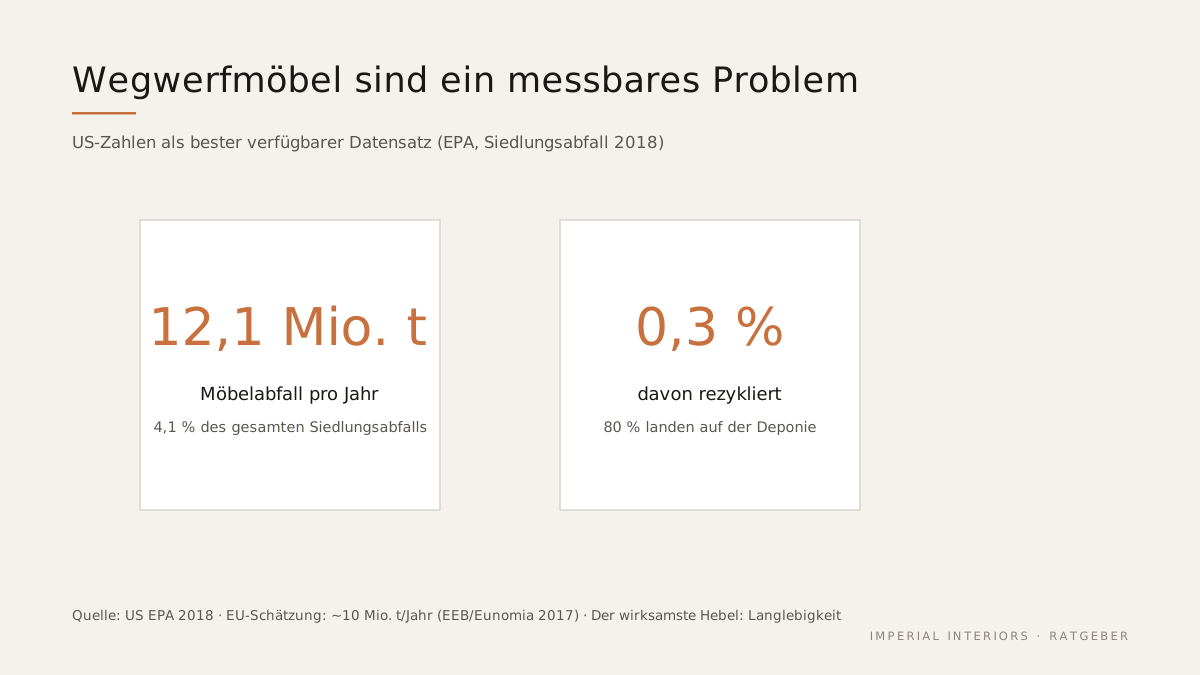
The problem in numbers – honestly accounted for
The best available data comes from the US: for 2018, the environmental agency EPA reports 12.1 million tonnes of furniture and furnishings in municipal waste – 4.1 percent of the total waste volume. 80.1 percent of it was landfilled, 19.5 percent incinerated, and 0.3 percent recycled. For Europe, no official furniture waste statistics exist; a study commissioned by environmental associations estimates around 10 million tonnes per year, mostly landfilled or incinerated. Switzerland, too, does not track furniture as a separate waste category – only the overall figures are documented here (2024: around 6 million tonnes of municipal waste, 52 percent recycling rate); old furniture typically goes into incineration as bulky waste. Where numbers are missing, we do not claim any.
What the EU is planning: ecodesign for furniture
On the regulatory side, things are moving: in April 2025, the EU included furniture and mattresses in the first working plan for the new Ecodesign Regulation (ESPR) – as priority product groups for which binding requirements on durability, repairability and recyclability are to be developed by 2030. These are still plans, not applicable regulations – but the direction is set, and it matches what high-quality manufacturers do anyway: build furniture that endures.
The biggest lever: length of use
From the waste figures follows the simplest sustainability rule in furnishing: the most sustainable piece of furniture is the one that never has to be replaced. Three properties extend the length of use – we flag them as trade practice, whose logic also stands behind the EU plans: repairable construction (detachable joints, available spare parts), replaceable wear parts (covers, toppers, upholstery cores – with our beds, for instance, components can be renewed over their lifetime) and timeless design that survives changes in style. Then there is the second life: well-preserved furniture belongs sold, given away or taken to the second-hand store – not in the dumpster.
Buying sustainably: the short checklist
- Ask about repairability: are there spare parts, replaceable covers, renewable components?
- Treat construction quality as a first-rank sustainability criterion – short lengths of use create the documented mountains of waste.
- Check material origin and emissions (FSC, OEKO-TEX, emission class).
- Timeless design over trend: what still pleases in five years will not be replaced.
- Give old furniture a second life: sale, donation, second-hand store – disposal is the last option.
Frequently asked questions
How big is the furniture waste problem really?
The US environmental agency EPA reports 12.1 million tonnes of furniture waste for 2018 (80% landfilled, 0.3% recycled); for the EU, a study estimates ~10 million tonnes annually. For Switzerland, no official furniture statistics exist – we say so openly.
Is expensive furniture automatically more sustainable?
No – what is used longer is more sustainable. Price can go hand in hand with durable construction and repairability, but it does not guarantee them. What counts are detachable joints, available spare parts, replaceable wear parts and timeless design.
What is the EU planning for furniture?
In the working plan for the Ecodesign Regulation (ESPR, April 2025), furniture and mattresses are priority product groups: binding requirements on durability, repairability and recyclability are to be developed by 2030. This is not yet applicable law.
Sources & studies
The factual statements in this article are based on the following sources — each framed in the text as a study, testing institute, official figure, convention or manufacturer information:
- US EPA: Durable Goods – Furniture and Furnishings (Siedlungsabfall-Daten 2018).
- EEB/Eunomia (2017): Circular Economy Opportunities in the Furniture Sector (~10 Mio. t/Jahr EU).
- Europäische Kommission: ESPR Working Plan 2025–2030 (Möbel & Matratzen als prioritäre Produktgruppen).
- BAFU: Abfallstatistik 2024 – Siedlungsabfälle und Recyclingquote Schweiz.
Prefer personal advice?
Initial consultation, first home visit and initial concept are free and non-binding. Try our beds any time in the showroom at Nüschelerstrasse 30, Zurich.