
How Long Does a Mattress Last? Honest Answers on Lifespan and Hygiene
There is no scientifically proven rule such as “replace every 8 years” – such intervals come from the industry, not from research. What is established: worn-out beds that no longer support you impair sleep, washing bed linen at 55 °C or above reliably kills house dust mites, and below 50% humidity mites dry out. What counts is the condition of the bed, not its year of birth.
The Mattress “Expiry Date”: An Honest Assessment
Recommendations such as “replace after seven to eight years” sound precise but are not scientifically supported. The frequently cited study on the subject – participants switched from beds averaging 9.5 years old to new systems and reported less back pain and better sleep – had no control group and was funded by an industry association; novelty effects cannot be ruled out. What the research actually supports: sagging sleep systems that no longer provide support measurably impair sleep quality. The right yardstick is therefore condition: visible hollows, a noticeable loss of support, increasing morning complaints – not a number of years.
House Dust Mites: Where They Live and What Really Helps
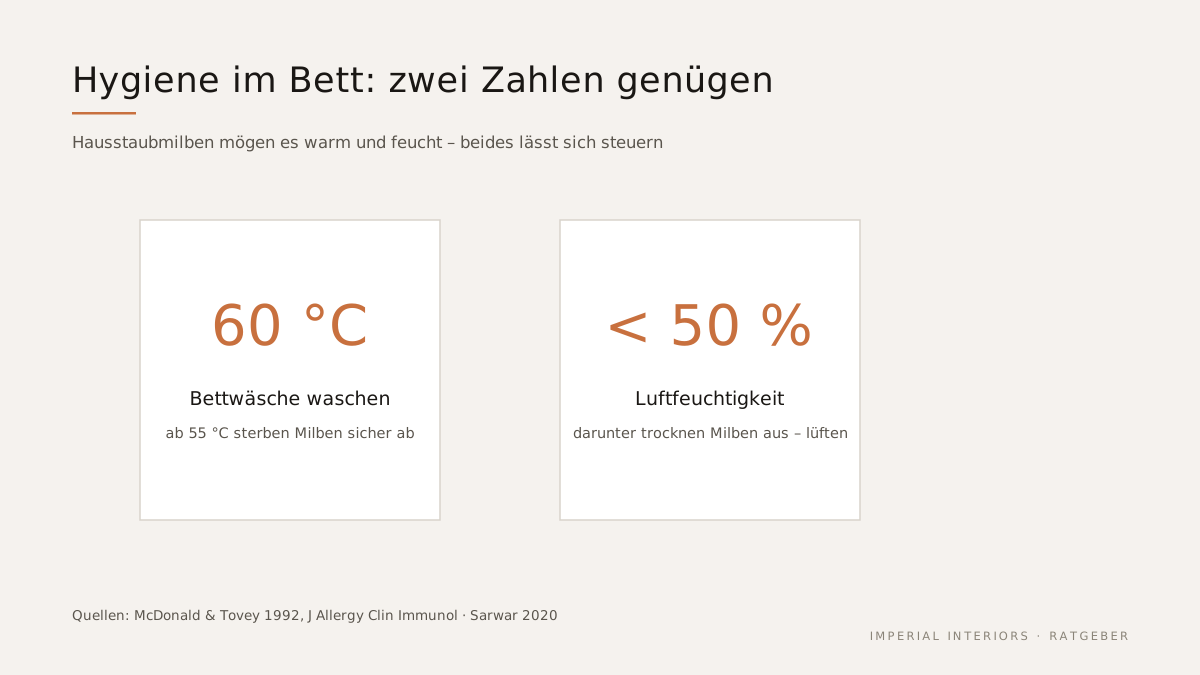
House dust mites preferentially colonise mattresses, pillows and bedding – there they find skin flakes for food, along with warmth and moisture. Their living conditions are also their weak point: below roughly 50 percent relative humidity, mites dry out and the population declines. For washing, a clear, experimentally proven threshold applies: at 55 degrees Celsius and above, all mites are killed – hence the practical recommendation to wash bed linen at 60 degrees. Cold washing does remove over 90 percent of the water-soluble allergens, but it leaves live mites behind, which then go on to produce new allergens.
Allergen-Proof Encasings: Useful, but No Miracle Cure
Mite-proof covers for mattress and pillows demonstrably reduce allergen concentrations in the mattress – shown, among others, by a large randomised study in the New England Journal of Medicine. Just as honestly: as a standalone measure, this allergen reduction did not reliably lead to fewer symptoms in allergy sufferers, and a Cochrane review of 54 studies found no benefit of mite-control measures, including encasings, on asthma outcomes. For house dust mite allergy sufferers, encasings are a sensible building block – but expectations should remain realistic, and treatment should be medically supervised.
A Care Routine for a Hygienic Bed
Based on proven facts and established practice:
- Wash bed linen regularly at 60 °C – the mite-killing threshold of 55 °C is experimentally proven.
- Keep bedroom humidity low and air the room regularly; below ~50% relative humidity, mites dry out.
- Fold back the duvet in the morning so moisture can escape from the bed (practical recommendation).
- Turn or rotate the mattress according to the manufacturer's instructions and wash the cover if it is removable.
- If you have a house dust allergy: consider mite-proof allergen encasings – in consultation with your doctor.
- Replace the bed when it sags or no longer supports you – regardless of its age.
Frequently asked questions
When do I really need to replace my mattress?
When it loses its supportive function: visible body impressions, noticeable sagging or increasing complaints on waking. There is no scientifically proven age limit – blanket figures in years come from the industry, not from independent research.
At what temperature should bed linen be washed?
At 55 °C and above, house dust mites are reliably killed – in practice, the 60 °C programme is recommended. Cold washing removes a large share of the allergens, but surviving mites quickly produce new ones.
Do mite-proof covers (encasings) help?
They demonstrably reduce the allergen load in the mattress. As a standalone measure, however, they do not reliably improve allergy symptoms – they belong within an overall treatment plan supervised by a doctor.
Does airing the room help against mites?
Indirectly, yes: mites need moisture and dry out below roughly 50% relative humidity. Regular airing lowers the humidity in both room and bedding – a proven lever against the population.
Sources & studies
The factual statements in this article are based on the following sources — each framed in the text as a study, testing institute, official figure, convention or manufacturer information:
- McDonald LG, Tovey E (1992): The role of water temperature and laundry procedures in reducing house dust mite populations. J Allergy Clin Immunol 90(4):599–608.
- Sarwar M (2020): House Dust Mites – Ecology, Biology, Prevalence, Epidemiology and Elimination. IntechOpen.
- Terreehorst I et al. (2003): Evaluation of impermeable covers for bedding in patients with allergic rhinitis. NEJM 349(3):237–246.
- Gøtzsche PC, Johansen HK (2008): House dust mite control measures for asthma. Cochrane Database CD001187.
- Jacobson BH et al. (2009): Changes in back pain and sleep quality after introduction of new bedding systems. J Chiropractic Medicine 8(1):1–8 (unkontrolliert, branchenfinanziert).
- Verhaert V et al. (2011): Ergonomics in bed design. Ergonomics 54(2):169–178.
Note: This article provides general knowledge and does not replace medical advice. Persistent complaints should be clarified by a doctor.
Prefer personal advice?
Initial consultation, first home visit and initial concept are free and non-binding. Try our beds any time in the showroom at Nüschelerstrasse 30, Zurich.