
Recognizing High-Quality Furniture: Material, Craftsmanship, Certificates
Quality shows where nobody looks: on back panels, in joints and inside the upholstery. Objective anchors exist for emissions (class E1; from August 2026 the stricter EU limit of 0.062 mg/m³ formaldehyde applies) and certificates (FSC for wood, OEKO-TEX for textiles). And one prejudice deserves correcting: veneer is not a “cheap substitute” for solid wood but a quality construction method in its own right.
Understanding wood: solid and veneer are both paths to quality
Under the German trade convention (DIN 68871), a piece of furniture may only call itself “solid wood furniture” if all parts except the back panel and drawer bottoms are made of solid wood of the stated species. Veneer, in turn, is real wood in thin leaves (trade definition per DIN 68330), applied to dimensionally stable substrates – resource-efficient, low-warp and, for large surfaces with a continuous grain pattern, often the technically better solution. A cleanly veneered sideboard of Italian manufacture is not a compromise but craftsmanship. Objective material characteristics come from wood databases: oak, for example, brings high surface hardness with a raw density of around 0.71 g/cm³ – ideal for heavily used surfaces; softer species score with looks and feel. That is not a ranking but a matching of material to purpose.
Emissions: E1 today, stricter EU limit from 2026
In wood-based materials, formaldehyde is the regulated pollutant. The established emission class E1 corresponds to a maximum of 0.124 mg/m³ in the test chamber. Important for anyone buying furniture now: with EU Regulation 2023/1464, a stricter limit of 0.062 mg/m³ applies EU-wide from August 6, 2026 to furniture and wood-based products. Reputable manufacturers already meet this level today – asking costs nothing and quickly separates the wheat from the chaff.
Certificates that actually say something
Two labels have substance and clear institutions behind them: FSC (Forest Stewardship Council, founded 1994) certifies wood from responsibly managed forests – over 160 million hectares worldwide, with independent third-party auditing and the product labels FSC 100%, FSC Mix and FSC Recycled. OEKO-TEX Standard 100 (issued in Zurich) tests textiles for more than 1000 harmful substances – every component of an article, with annually updated limit values that in part go beyond legal requirements. Our own brand NUVOSETTE, for example, manufactures to the OEKO-TEX standard. Labels do not replace looking closely, but they objectify two questions: where does the wood come from, and what is in the fabric?
Upholstered furniture: quality sits inside
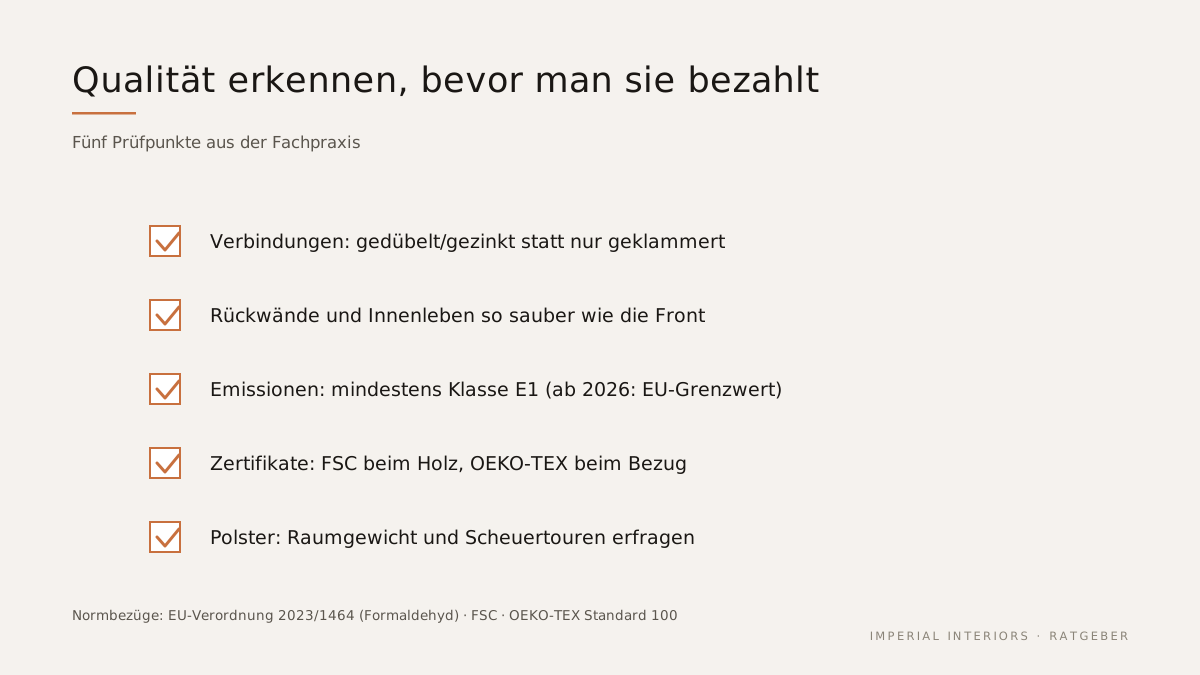
With a sofa, the invisible decides – here we are in the territory of trade practice, and we flag it as such: a dimensionally stable frame of solid or laminated wood, high-quality suspension, a foam core with sufficient foam density (kilograms per cubic meter – more material generally means more shape retention) and a cover with tested abrasion resistance (Martindale method). Two questions you may put to any salesperson: what is the foam density of the seat foam? How many Martindale rubs does the cover withstand?
The five-point check in the store
- Look at the joints: doweled, dovetailed or screwed rather than merely stapled and glued (trade practice).
- Check the unseen: back panels, drawer bottoms and drawer runners reveal the manufacturer's care.
- Ask about the emission class: at least E1 – from August 2026 the stricter EU limit applies.
- Read the certificates correctly: FSC for wood, OEKO-TEX Standard 100 for covers and textiles.
- Solid wood needs the right climate: 40–60% relative humidity prevents cracks and warping (practical knowledge).
Frequently asked questions
Is veneer inferior to solid wood?
No – veneer is real wood on a dimensionally stable substrate and a quality construction method in its own right: low-warp, resource-efficient and, for large surfaces with continuous grain, often technically superior. Solid and veneered are different paths, not a difference in rank.
What does emission class E1 mean – and what changes in 2026?
E1 limits formaldehyde to 0.124 mg/m³ of test chamber air. From August 6, 2026, the stricter REACH limit of 0.062 mg/m³ applies EU-wide to furniture (Regulation (EU) 2023/1464). Good manufacturers already meet it today.
What do FSC and OEKO-TEX actually tell you?
FSC attests to wood from responsibly managed forests with independent auditing; OEKO-TEX Standard 100 attests to textiles tested for harmful substances (over 1000 tested substances, updated annually). Both are labels with substance – but they do not replace a close look at the workmanship.
How do I recognize a high-quality sofa?
By its interior: a dimensionally stable wooden frame, high-quality suspension, seat foam with sufficient foam density, a cover with tested abrasion resistance (Martindale). You may ask specifically about foam density and Martindale rubs when buying.
Sources & studies
The factual statements in this article are based on the following sources — each framed in the text as a study, testing institute, official figure, convention or manufacturer information:
- waldwissen.net (LWF/WSL): Nutzung der Eiche – Materialkennwerte (Rohdichte ~0,71 g/cm³).
- Verordnung (EU) 2023/1464: Formaldehyd-Grenzwerte (REACH Anhang XVII, Eintrag 77) – gültig ab 6.8.2026.
- Fraunhofer WKI: E1 (EN 717-1) und die neuen EU-Grenzwerte im Vergleich.
- FSC International: About us – Zertifizierungssystem und Produktlabel.
- OEKO-TEX AG Zürich: OEKO-TEX Standard 100.
Prefer personal advice?
Initial consultation, first home visit and initial concept are free and non-binding. Try our beds any time in the showroom at Nüschelerstrasse 30, Zurich.